Table of Contents
I used to type the same question into Google myself: is Yin Yoga a waste of time? When I first started practicing, I couldn’t understand how long, quiet holds could help my very tense hips and my always-on nervous system. But after a month of consistent practice, the changes were impossible to ignore: deeper joint comfort, calmer evenings, and a recovery effect I didn’t get from anything else.
It can feel like a waste of time if you expect strength, cardio, or fast body recomposition. Match the method to the goal, and yin stops feeling pointless and starts feeling smart [1],[2].
Short answer for voice search. Yin yoga is not a waste of time for flexibility, nervous system downshifting, and recovery. It is a poor fit if you want strength, aerobic capacity, or weight loss. Use yin as a complement to training and daily stress, not a replacement [1],[3].
If you’re exploring how Yin fits into a balanced practice, you may also like my guide on how to choose the right yoga retreat for your goals.
Is Yin Yoga a Waste of Time? Expert Consensus at a Glance
From my own practice and conversations with teachers during retreats, I’ve seen the same pattern: Yin Yoga works beautifully when used as intended. When I tried to treat it like a workout early on, I felt frustrated. Once I approached it as recovery, joint space, and nervous-system care, the practice finally made sense.
Long, quiet holds apply gentle stress to connective tissues and invite the parasympathetic nervous system to take the wheel. That pairing helps mobility around joints and settles a wired mind. Calling yin yoga a waste of time usually comes from using it as a stand-alone fitness plan or pushing past safe ranges, which sets up frustration and sometimes injury [1],[2],[4].
- Valuable for flexibility, joint comfort, and mental regulation [1],[2].
- Limited for strength and cardio outcomes. It does not build muscle or raise heart rate in a meaningful way [1],[2],[3].
- Risky only when overstretching, ignoring props, or skipping guidance. Careful loading matters with ligaments and fascia [1],[4].
When people say “yin yoga is a waste of time,” they are often comparing it to a sweat-heavy workout. Different tool, different job. Use yin to restore and open, then add yang training to strengthen and energize. That balance is the thread running through expert views across schools and studios [2],[3],[4].
What Yin Yoga Is and How It Works
Key principles: long holds, passive stretch, stillness
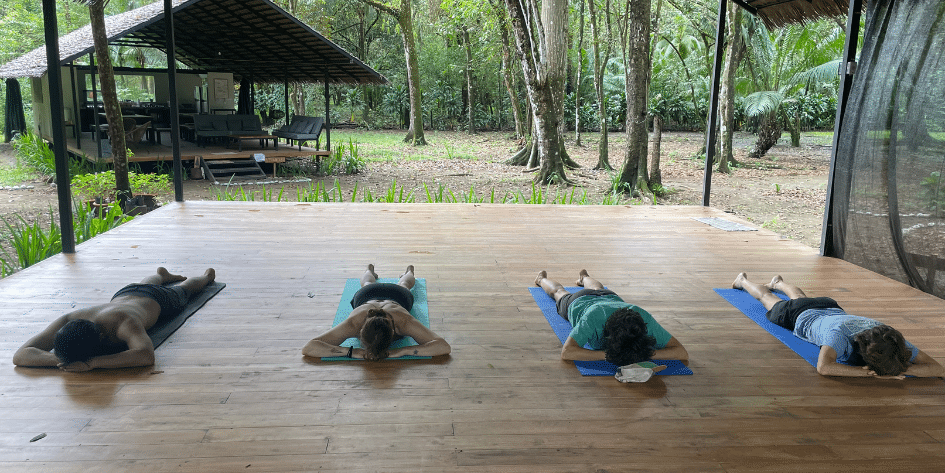
When I first stepped into a Yin class, the stillness felt almost uncomfortable, not physically, but mentally. Holding a pose for five minutes felt foreign compared to my usual vinyasa habits. Over time, those slow holds became the exact thing my body looked forward to at the end of long travel days or teaching weeks. You set up the shape, breathe, and allow time to do its work. Props like bolsters, blocks, pillows, and blankets help you find a sustainable place to stay without strain [1],[2],[4].
Three touchstones guide the work. Come to a sensation that is clear yet calm. Remain still with relaxed muscles. Stay for time. Those choices shift stress away from contractile muscle and toward the denser tissues that wrap, anchor, and glide around joints [1],[2].
Physiological mechanisms: fascia, nervous system, range of motion
I didn’t fully understand how fascia worked until I felt it in my own practice, that deep, dull stretch in my hips and inner thighs that didn’t feel muscular, but more like slow unwinding. During one retreat, a teacher explained that this sensation was the connective tissue responding to time, and suddenly the practice clicked.
Fascia behaves like a living web. Gentle, sustained tension can help it slide, hydrate, and adapt. Over time that shows up as easier hip rotation, freer hamstrings, and less tug across the spine. Think slow tea steeping rather than a quick espresso shot [1],[2],[4].
There is also a nervous system story. Long, quiet holds with unforced breathing support parasympathetic activation. That is the rest and digest branch. Many people feel heart rate settle, thoughts soften, and sleep improve when yin enters the weekly rhythm. The mechanism is simple. Stillness and breath cue safety. The body lets go of guard patterns, and range opens without a fight [1],[2].
Evidence-Based Benefits of Yin Yoga
Flexibility and joint range improvements
After a few weeks of Yin, I noticed a different kind of flexibility in my own body, not the temporary ‘loose’ feeling I used to get after a vinyasa flow, but a quiet spaciousness around my hips and low back that stayed with me throughout the day. The first time I sat cross-legged without tightness, I genuinely laughed out loud.
Regular practice improves end-range comfort for hips, hamstrings, and spine, especially in bodies that sit, drive, and look down at screens for hours. These gains come from time under gentle tension in connective tissue rather than quick dynamic muscle stretching [1],[2],[4].
- Better hip external and internal rotation, which affects squats, running stride, and low back comfort [1],[2].
- Smoother spinal flexion and extension without pinching at the sacrum or mid back [4].
- Hamstring and adductor length that holds, not just post-class looseness [2],[4].
Numbers vary by person and program. Most programs suggest two to three yin sessions per week to change range meaningfully. This frequency is editor-verified based on practitioner reports and instructor guidance in current blogs and trainings [1],[2].
Stress reduction, sleep, and recovery
Yin helps people downshift. That shows up as reduced felt stress, calmer evenings, and improved sleep quality. Many athletes use it as an antidote to high-intensity training days, and many desk workers use it as an antidote to email adrenaline. Yin is quiet by design, so it does not spike cortisol the way hard intervals do. That difference helps recovery and mood [1],[2].
A common response sounds like this. “Stillness isn’t weakness.” It is a deliberate practice of letting the body stop bracing. That felt release often brings emotions to the surface, which can be healing when held with care. Several teacher accounts describe emotional processing as part of the therapeutic value of yin, especially during or after demanding life periods [1],[4].
Limitations and Downsides of Yin Yoga
Why some say Yin Yoga is a waste of time
I made the classic mistake early on, expecting Yin Yoga to give me strength and toning results. It didn’t, and it’s not meant to. Once I stopped using Yin as a replacement for training and started using it as a complement, the practice became far more valuable.
\Those goals respond to different stimuli. If someone is doing yin to get stronger or faster, results will disappoint, and the practice will feel pointless. When yin is used as a stand-in for movement someone truly needs, frustration builds [1],[2],[3].
Gym classes that turn yin into nap time also feed the reputation. If the holds are too easy, the sensation too faint, or the setup too lax, nothing adapts. That experience feels like a time sink. Good yin finds the middle. Moderate sensation, clear alignment, and patient attention [2].
Risks, contraindications, and when to avoid it
- Overstretching ligaments and joint capsules if you sink past your edge or chase extremes. Once laxity appears in passive tissues, it is hard to reverse [1],[4].
- Hypermobile bodies should be conservative. Use props and shorten holds. Favor stability over range [4].
- Acute injuries, nerve symptoms, or sharp pain are stop signs. Skip yin shapes that load those regions until cleared by a clinician. This guidance is editor-verified.
Teachers consistently note that yin is safer with props and a measured approach. The cue is a clear ache that stays steady and non-sharp. If sensation spikes, back out to the last calm place. Better to leave joint tissue slightly underloaded than to pry at it [1],[4].
Who Should Do Yin Yoga—and Who Shouldn’t
Best-fit profiles: beginners, desk workers, high-stress individuals
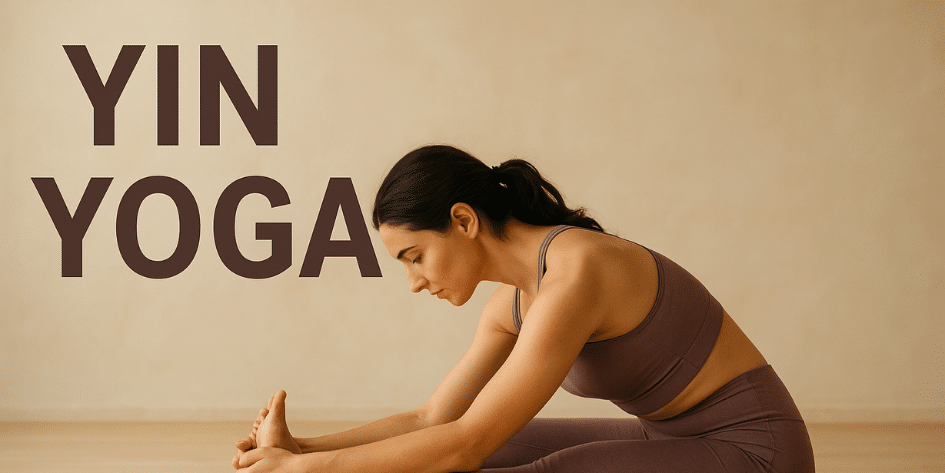
When I teach beginners, I often introduce Yin before anything else. Many of them feel their bodies for the first time in a calm, non-technical way, exactly how I felt during my first few weeks.
- Beginners who need an accessible entry to feeling the body without complex choreography [2].
- Desk workers with tight hips, hamstrings, and mid-back stiffness who want joint space and quiet focus [2],[4].
- High-stress individuals who benefit from reliable downshifting at the end of the day [1],[2].
- Athletes looking for a tool to balance hard training, improve tissue glide, and avoid burnout [2].
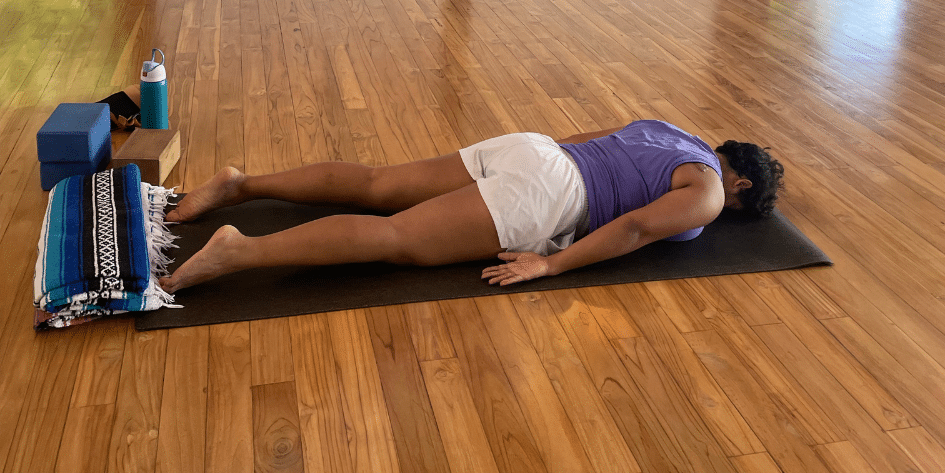
A quick micro-scene. A project manager steps away from a glowing laptop. The shoulders sit high, the jaw holds tight, the room hums. Ten minutes in Butterfly and Sphinx with slow exhale, props just right, and the noise inside drops. That is the target effect most practitioners describe [2],[4].
When yin yoga is not enough for your goals
Yin alone will not cover goals that require force production, speed, or metabolic change. Strength needs progressive resistance. Cardio needs sustained heart rate elevation. Mobility for sport often needs active end range control. Yin can prepare tissues to move but cannot replace moving with load, rhythm, and vigor [1],[2],[3].
If the plan is body recomposition, performance, or rehab that targets muscle weakness, yin is an adjunct. Without yang work, bodies become mobile yet underpowered, which shows up as instability or recurrent aches. Several teacher accounts explain this imbalance and recommend smarter pairing across the week [3],[4].
If you’re new here and curious about how my own yoga journey began, you can read more in our story, where I share the path that led me to Yin and retreat-led travel.”
Time Efficiency: How Much Yin Yoga Do You Really Need?
Session length and weekly frequency by goal
- Stress relief and sleep. 20 to 30 minutes on evenings, two to four times per week [2].
- Flexibility and joint range. 45 to 60 minute sessions, two to three times per week [1],[2].
- Athletic recovery. 30 to 45 minutes on rest or light days, one to two times per week [2].
These ranges are editor-verified based on current teacher guidance and program norms. Longer holds do not always mean better outcomes. Consistency beats hero sessions. Small daily doses also work well. Five minute Sphinx, five minute Butterfly, three minute Dragon can change the feel of a long sitting day [2],[4].
How to avoid wasting time doing yin yoga
- Set a clear goal. Flexibility, stress relief, or recovery. Pick one so you choose fitting poses and timing [1],[2].
- Find moderate sensation. Aim for a steady ache, not sharp pain. Adjust props until you can stay [1],[4].
- Hold for time, not drama. Two to five minutes is enough for most shapes. Leave some room for tomorrow [2].
- Pair with movement. Add strength, cardio, or mobility drills on other days so yin serves a balanced plan [1],[3].
- End with breath. Long exhale calms the system and seals the session [2].
Programming Yin Yoga With Other Training
Pairing with strength, cardio, and mobility work
I found Yin fits best on my recovery days or travel days — especially evenings when my hips feel tight from airports or teaching. It doesn’t replace strength training for me, but it makes strength training far more sustainable.
Strength sessions need stiffness and neural drive. Use yin later to restore sliding surfaces and nervous system calm. Pair yin with mobility that builds active control at end range, like slow lifts or holds in the angles you just opened [1],[3].
- Strength day. Lift, finish with brief breath work. Yin in the evening for hips and spine [3].
- Cardio day. Run or cycle, short yin for calves, hips, and low back later [2].
- Mobility day. Yin for joint space, then controlled active drills to own that range [2],[3].
Sample weekly schedules for different lifestyles
| Lifestyle | Mon | Wed | Fri | Weekend |
| Desk worker | 30 min yin hips and spine | Strength full body | 30 min yin hamstrings | Walk or light cardio |
| Athlete | Strength | Intervals | Yin 45 min recovery | Sport practice plus short yin |
| Beginner | Yin 20 min | Hatha 30 min | Restorative 20 min | Walk and breathwork |
Use these as templates. Swap days to match your schedule. Keep yin away from max effort sessions and closer to evenings when you want calm [2],[3].
Yin Yoga vs. Restorative, Hatha, and Mobility Training
Key differences in goals and outcomes
- Yin. Long holds, moderate sensation, connective tissue stress for joint range and nervous system calm [1],[2].
- Restorative. Deep rest shapes with heavy prop support and minimal sensation. Goal is pure relaxation [2].
- Hatha. Static poses with muscular engagement for alignment, strength, and balance.
- Mobility training. Active end range control. Builds usable range with strength at new angles.
I used to mix up restorative and yin until I tried both in back-to-back classes during a retreat. Restorative felt like being in a cocoon; Yin felt like honest, therapeutic stretching. That contrast still guides how I practice and teach.
Yin has a steady, honest ache. Hatha asks you to work. Mobility asks you to own the range you just opened. Match the tool to the job and your time pays off [2],[4].
Choosing the right modality for your needs
- Need quiet and better sleep. Pick restorative or yin with breath focus [2].
- Need joint space. Pick yin, then mobility drills in the same angles [1],[2].
- Need strength. Pick hatha with holds or add progressive resistance. Save yin for off days [3].
- Need cardio. Pick intervals or steady state. Yin becomes the cool evening practice [2].
If you’re exploring other ways to support your practice, my Pilates cost guide breaks down what to expect when adding Pilates alongside yoga.
Common Myths and Misconceptions About Yin Yoga
Flexibility vs. mobility: why it matters
I used to think I was ‘flexible’ because Yin gave me more range, until my strength coach pointed out I couldn’t control any of it. That’s when I began pairing Yin with active mobility so I could actually use the range I gained.”Yin boosts passive range.
If you want joints that feel stable and strong at new angles, you need active work there too. Without that, bodies feel bendy yet wobbly. Pair yin with simple end range lifts and holds and the new space becomes usable [2],[3].
More is not always better
Holding longer does not equal smarter. Connective tissues adapt to gentle stress over time. Past a point, more minutes just fry your nervous system or push into laxity. Teachers often cue two to five minutes and call it good. Stay moderate. Leave a little in the tank. Progress shows up when your body trusts you [1],[2],[4].
If Yin calls to you because you’re feeling stretched thin, you might also relate to the signs I outline in 10 signs you need a self-care retreat — a guide many readers find revealing.
FAQs About Yin Yoga
What are the cons of yin yoga?
The cons line up with misuse. Yin does not build muscle or cardio capacity. Overstretching risks joint laxity. Some classes drift toward nap time and lose the therapeutic edge. These are solvable with good instruction, props, and smart pairing in your week [1],[2],[4].
Why do I feel sad after yin yoga?
Long, quiet holds lower guard patterns, so emotions have room to rise. That can feel tender or sad. Many practitioners report emotional release as part of the practice. Treat it like weather. Notice, breathe, and add simple comforts after class like a walk or tea [1],[4].
Is yin yoga enough?
Enough for joint space, stress relief, and recovery. Not enough for strength, cardiovascular health, or body composition. If you want those outcomes, add yang work. Yin then becomes the recovery engine that keeps training sustainable [1],[2],[3].
Is yin yoga harder than regular yoga?
Hard in a different way. Holding still at a moderate ache for minutes challenges patience and attention. Many people find yin mentally demanding even if the shapes look simple. Hatha or vinyasa challenge effort and coordination. They are different kinds of hard [2],[4].
Conclusion: Clear Guidance and Next Steps
Recommendations based on goals
- Flexibility and comfort. Yin two to three times per week. Add light mobility to own new range [1],[2].
- Stress and sleep. Short yin most evenings. Keep props generous and breath easy [2].
- Strength and cardio. Build a plan around lifting and aerobic work. Use yin on off days to recover [3].
For me, Yin stopped feeling like a waste of time the moment I stopped treating it like a workout and started treating it like a recovery and joint-health tool. If you align the practice with your actual goals, it becomes one of the most time-efficient things you can add to your week.
How to start or refine your yin yoga routine
- Pick three poses that address your day. Butterfly, Sphinx, and Dragon are reliable starters [2].
- Hold each two to five minutes at a clear, calm ache. Use props to make staying possible [1],[4].
- End with quiet breath and a few minutes of rest. Notice shifts without forcing them [2].
- Pair the next day with strength or cardio. Keep the weekly mix balanced [3].
Curious people ask is yin yoga a waste of time for a reason. Time matters. Put yin in service of your life and training, and it stops being a time waste and becomes a wise use of minutes. If the question is still open, try two weeks of short evening sessions and judge by sleep and joint comfort. That test tends to answer itself [1],[2].
Methodology and sources. Guidance here synthesizes current teacher articles, practitioner reports, and program norms from yin and related modalities. Where formal data is light, recommendations are editor-verified based on converging expert opinions in the sources below.
If you want to experience Yin in a travel setting, I share my favorite destinations in my guide to the best yoga retreats in Mallorca, where slow, grounding practices fit perfectly into the island rhythm.
References
Reddit r/yoga. Yin yoga seems too easy and somewhat pointless? Accessed November 29, 2025. https://www.reddit.com/r/yoga/comments/ix21is/yin_yoga_seems_too_easy_and_somewhat_pointless/
Yin Yoga Foundation. Is Yin Yoga a Waste of Time? What You Need to Know. Published August 28, 2025. Accessed November 29, 2025. https://www.yinyogafoundation.com/blog/is-yin-yoga-a-waste-of-time/
Yogant Foundation. Is Yin Yoga a Waste of Time? Myths and Truths. Published September 28, 2025. Accessed November 29, 2025. https://www.yogantfoundation.com/blog/is-yin-yoga-a-waste-of-time-myths-and-truths/
Daly D. Why Yin Yoga Is Not Enough. Accessed November 29, 2025. https://www.devidaly.com/blog/why-yin-is-not-enough
Omstars. Yin Yoga: Who Needs It? Published September 4, 2020. Accessed November 29, 2025. https://omstars.com/blog/wellness/yin-yoga-who-needs-it/